+84 90 189 0068
 info@dxpsoftware.com

 +84 90 189 0068
 info@dxpsoftware.com
From microRNA Signals to Early Cancer Detection
miRNAcX analyzes serum microRNA profiles to generate predictions across 14 categories, including 13 cancer types and one noncancer group. It transforms complex biological signals into clear, structured insights that support cancer risk assessment and help healthcare professionals interpret molecular findings within each patient’s clinical context.




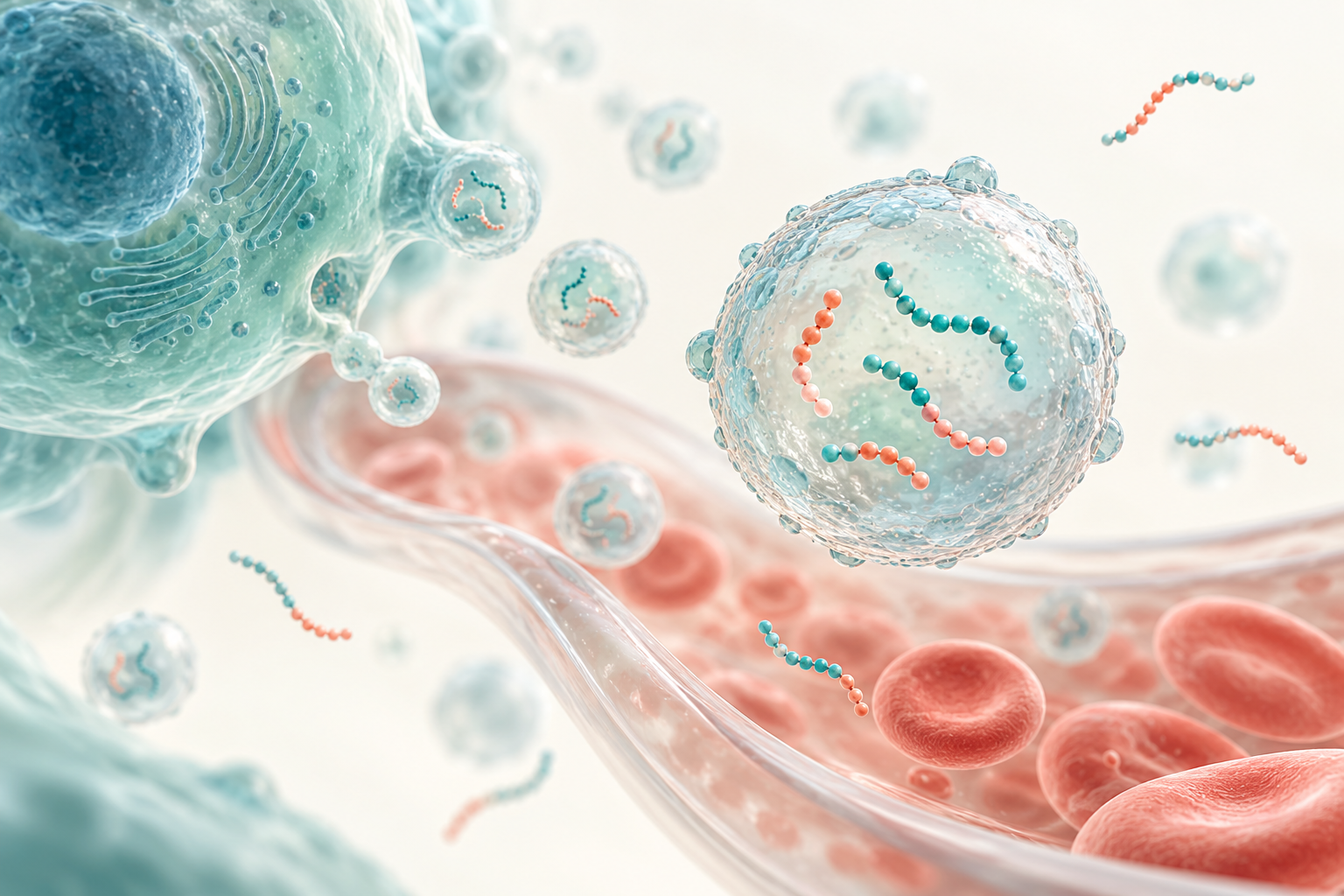
Understanding miRNA
MicroRNAs, or miRNAs, are small molecules naturally present in the body. They help regulate how cells use genetic information.
Some microRNAs circulate in the bloodstream. Their levels and patterns can provide clues about biological processes taking place in the body.
By studying these patterns, healthcare professionals can gain an additional layer of information to consider alongside a patient’s medical history, symptoms, and other test results.
From blood sample to clinical review
 01
Sample Collection
A blood sample is collected, and the serum is prepared for microRNA measurement.
 02
MicroRNA Profiling
The laboratory measures levels of selected microRNAs, creating a profile of their relative amounts.
 03
AI Analysis
miRNAcX analyzes the profile to generate predictions across 13 cancer types and one noncancer group, with a model probability for each category.
 04
Professional Interpretation
A healthcare professional reviews the predictions alongside the patient’s medical history and other findings to assess whether further evaluation is appropriate.
Molecular findings, clearly presented.
An illustrative miRNAcX report for professional review.
Model probability reflects the model output, not the patient's probability of having cancer.

Explore the categories included in miRNAcX
Predictions across 13 cancer categories and one noncancer group.
 Gastric Cancer
 Biliary Tract Cancer
 Colorectal Cancer
 Lung Cancer
 Bladder Cancer
 Hepatocellular Cancer
 Prostate Cancer
 Pancreatic Cancer
 Ovarian Cancer
 Esophageal Squamous Cell Cancer
 Breast Cancer
 Bone And Soft Tissue Sarcomas
 Intraparenchymal brain tumor
 Noncancer Group

“Our goal with miRNAcX is to bring mathematical rigor and AI to complex microRNA data, making molecular patterns clearer and more meaningful for professional review.”
Dr. Huynh Huu Dinh miRNAcX Project AuthorExplore miRNAcX in Action
Explore AI insights from microRNA patterns. Book a demo